EWP Success Stories
The Emergency Watershed Protection Program helps communities recover from natural disasters. The following success stories illustrate the agility of EWP to provide recovery assistance.

Official websites use .gov
A .gov website belongs to an official government organization in the United States.

Secure .gov websites use HTTPS
A lock (
) or https:// means you’ve safely connected to the .gov website. Share sensitive information only on official, secure websites.
The Emergency Watershed Protection (EWP) Program, a federal emergency recovery program, helps local communities recover after a natural disaster strikes.
OVERVIEW
The EWP Program offers technical and financial assistance to help local communities relieve imminent threats to life and property caused by floods, fires, windstorms and other natural disasters that impair a watershed. EWP does not require a disaster declaration by federal or state government officials for program assistance to begin. The NRCS State Conservationist can declare a local watershed emergency and initiate EWP program assistance in cooperation with an eligible sponsor (see the Eligibility section below). NRCS will not provide funding for activities undertaken by a sponsor prior to the signing of a cooperative agreement between NRCS and the sponsor.
NRCS offers financial and technical assistance for various activities under the EWP Program, including:
-provide protection from flooding or soil erosion;
-reduce threats to life and property;
-restore the hydraulic capacity to the natural environment;
-economically and environmentally defensible.
Recovery projects begin with a local sponsor or legal subdivision of state or tribal government. Eligible sponsors include cities, counties, towns, conservation districts, or any federally-recognized Native American tribe or tribal organization. Interested public and private landowners must work through a sponsor.
In some situations, landowners can directly apply for assistance through a floodplain easement at the local NRCS office when project funding for floodplain easements becomes available. States will hold a signup period for the impacted communities and the local NRCS offices will publicize that information in the affected communities.

All EWP projects must have a sponsor and demonstrate that they reduce threats to life and property; be economically, environmentally and socially sound; and must be designed to acceptable engineering standards.
NRCS partners with diverse sponsors to complete EWP Program projects. Sponsors include cities, counties, towns, conservation districts, or any federally-recognized Native American tribe or tribal organization.
Sponsors can apply for EWP Program assistance directly to NRCS while public and private landowners can apply for this assistance through a local sponsor.
Check out the EWP Sponsor Resource page for more information.
An LRA is a geographical area where housing values and individual income are less than 75% of a state’s average and unemployment is at least twice the U.S. average. Discover if your county qualifies as an LRA on the interactive map below.
If NRCS determines that an area qualifies as an LRA, the federal cost share for implementing EWP emergency measures may not exceed 90% of the construction costs.

LIMITED RESOURCE AREAS (LRAs)
NRCS has calculated LRAs at the county level (interactive map link below), however other areas may also meet the LRA criteria, as determined by NRCS.
The Emergency Watershed Protection Program helps communities recover from natural disasters. The following success stories illustrate the agility of EWP to provide recovery assistance.
Below, is the list of EWP Program Managers by state; they will guide you thru the process on how best to access assistance thru the EWP program.
The Emergency Watershed Protection Program helps communities recover from natural disasters. The following success stories illustrate the agility of EWP to provide recovery assistance.
Resources for EWP Program assistance.

EWP helps sponsors, landowners, and land operators to implement emergency recovery measures to relieve imminent hazards to life and property created by a natural disaster that causes a sudden watershed impairment. No State or Federal roads are covered under the EWP Program. Impairments may include, but are not limited to:
EWP provides both technical and financial assistance to local sponsoring authorities to preserve life and property. If a site is eligible, NRCS provides up to 75 percent of the costs for the repairs. The other 25 percent must be provided by a local sponsor and can be in the form of cash or in-kind services. The local sponsor can be a city, county, conservation district, or Tribal organization.
Local sponsors must submit a formal request to Mr. R. Phou Vongkhamdy, State Conservationist, for assistance within 60 days of the natural disaster occurrence, or 60 days from the date when access to the site is available. Your request must include a statement that you understand your responsibilities as a sponsor and are willing to pay your portion of the cost-share, along with information pertaining to the natural disaster including the nature, location and scope of the problems and the assistance needed (see Sample Sponsor Letter).
Requests for assistance should be sent to:
R. Phou Vongkhamdy, STC
USDA - Natural Resources Conservation Service
60 Quaker Lane, Suite 40
Warwick, RI 02886
If you identify possible projects within your community, please contact our office and submit an official request for assistance under the EWP Program.
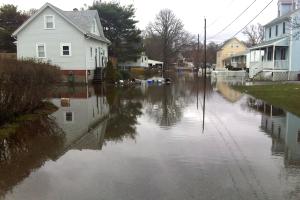
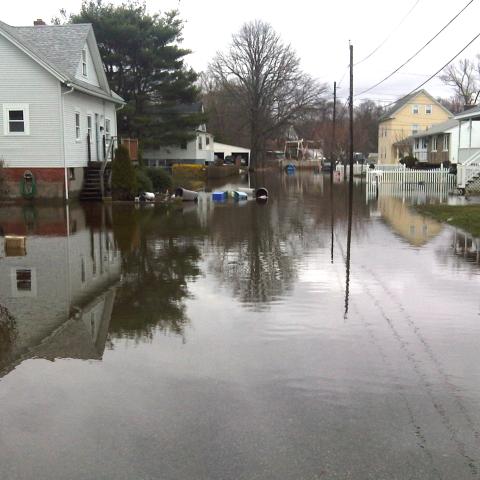
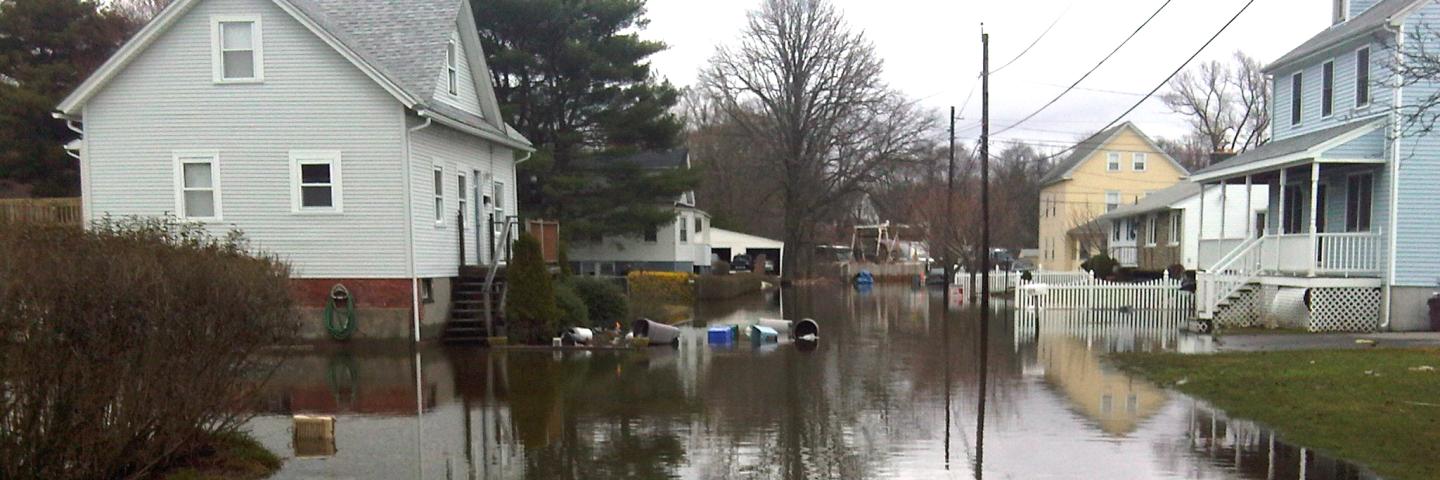
In July 2022, NRCS approved nearly $9.2 million in federal funds for floodplain restoration from damage by Tropical Storm Ida in East Providence, Middletown, and Narragansett, RI. Federal assistance will safeguard lives and property from imminent hazard of flooding, severe erosion and loss of infrastructure in future storms.
NRCS will cover 100 percent of actual project costs, except for infrastructure; additional funds will be requested as needed.
NRCS is partnering with the Rhode Island Association of Conservation Districts (RIACD - EWP Sponsor), which will accept applications from eligible landowners, secure appraisals and acquire land. The RIACD is contacting eligible landowners with information on how to apply for EWP and work with them through the application, appraisal and acquisition process, if they choose to participate. The easement acquisition process began in early July and construction is expected to begin in the spring of 2023 and be completed next summer.
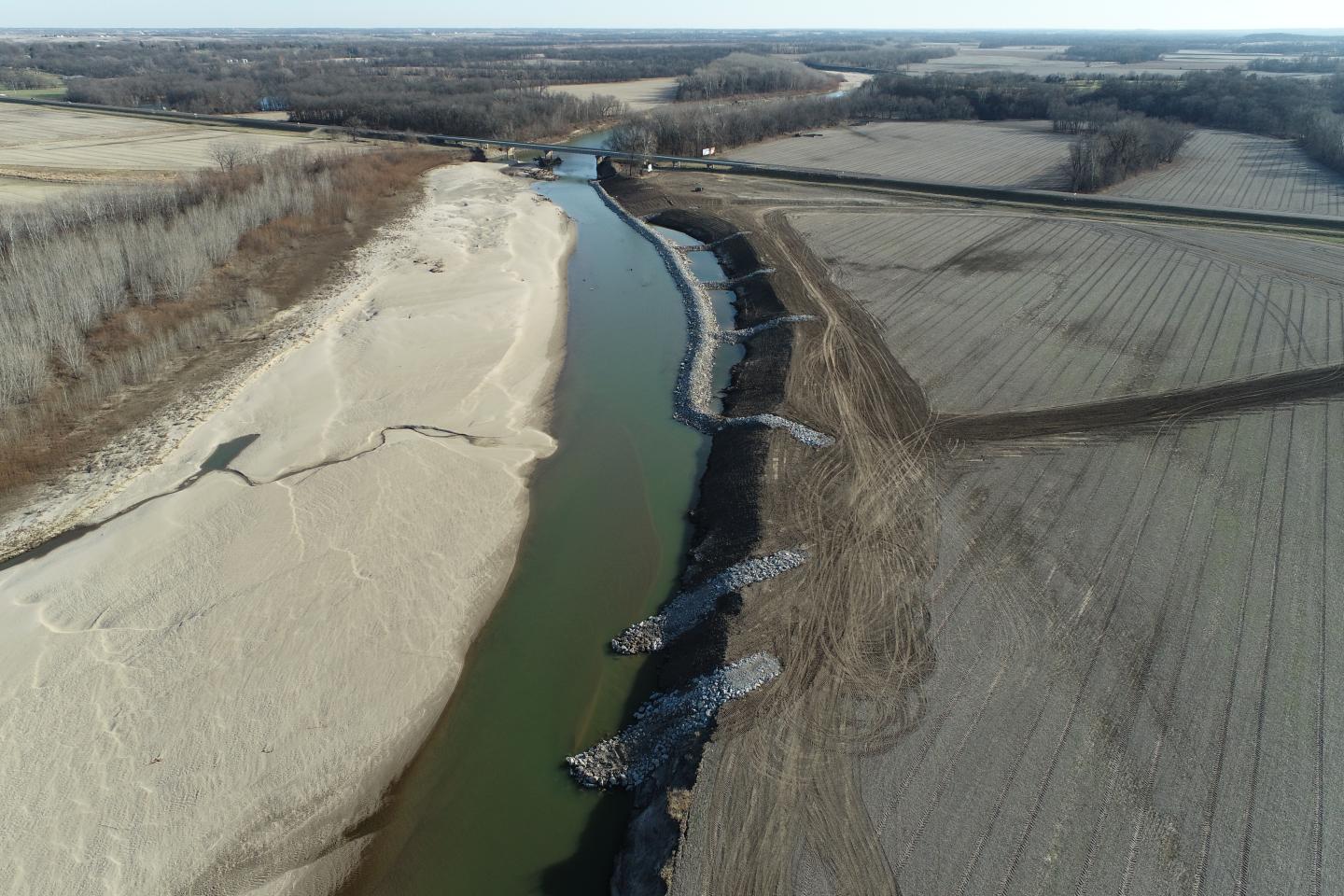
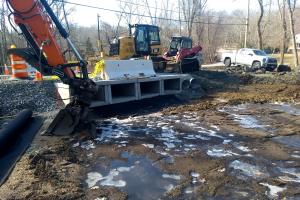
Woonasquatucket River (Johnston) streambank stabilization - completed September 2025
USDA is ready to help in the aftermath of natural disasters. Find which program best fits your current situation and needs.
USDA along with other agencies offer a wide range of disaster recovery assistance following these unfortunate events. Check out the agencies and their programs below for more information.
Farmers, ranchers, and non-industrial private forestland owners can apply for resource assistance through the Environmental Quality Incentives Program. Eligible land includes cropland, rangeland, and non-industrial private forestland. Recovery assistance includes but is not limited to: immediate soil erosion protection, minimizing noxious and invasive plant proliferation, protecting water quality, restoring livestock infrastructure necessary for grazing management, emergency animal mortality management.
When catastrophic non-disease natural events (ie. flood, fire, weather-related) occur, financial assistance for emergency animal mortality management may be offered.
Producers can contact the local field office at that time for more details.
Contact your local service center to start your application.
Do you farm or ranch and want to make improvements to the land that you own or lease?
Natural Resources Conservation Service offers technical and financial assistance to help farmers, ranchers and forest landowners.
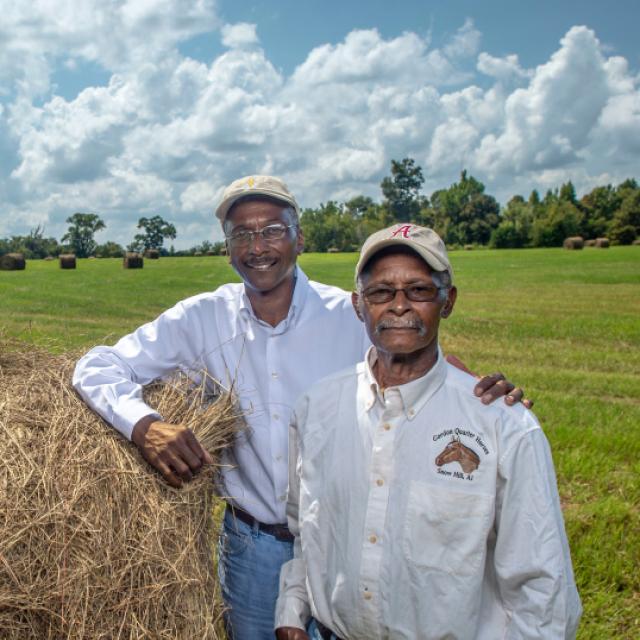
To get started with NRCS, we recommend you stop by your local NRCS field office. We’ll discuss your vision for your land.
NRCS provides landowners with free technical assistance, or advice, for their land. Common technical assistance includes: resource assessment, practice design and resource monitoring. Your conservation planner will help you determine if financial assistance is right for you.
We’ll walk you through the application process. To get started on applying for financial assistance, we’ll work with you:
Once complete, we’ll work with you on the application, or CPA 1200.
Applications for most programs are accepted on a continuous basis, but they’re considered for funding in different ranking periods. Be sure to ask your local NRCS district conservationist about the deadline for the ranking period to ensure you turn in your application in time.
As part of the application process, we’ll check to see if you are eligible. To do this, you’ll need to bring:
If you don’t have a farm number, you can get one from USDA’s Farm Service Agency. Typically, the local FSA office is located in the same building as the local NRCS office. You only need a farm number if you’re interested in financial assistance.
NRCS will take a look at the applications and rank them according to local resource concerns, the amount of conservation benefits the work will provide and the needs of applicants. View Application Ranking Dates by State.
If you’re selected, you can choose whether to sign the contract for the work to be done.
Once you sign the contract, you’ll be provided standards and specifications for completing the practice or practices, and then you will have a specified amount of time to implement. Once the work is implemented and inspected, you’ll be paid the rate of compensation for the work if it meets NRCS standards and specifications.