


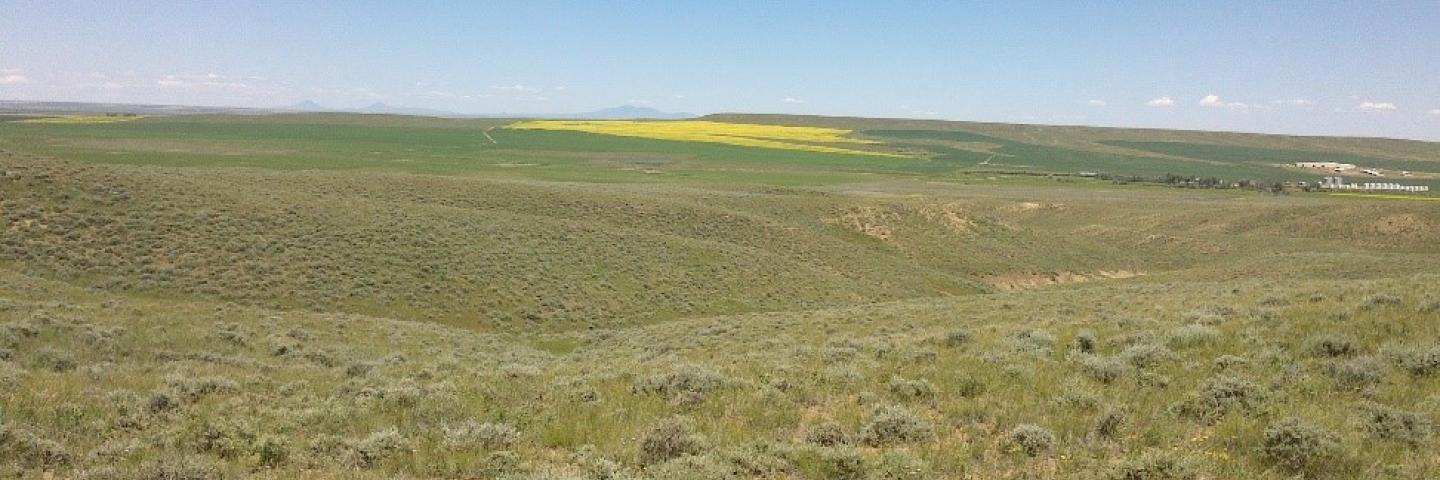
Hill County in north central Montana lies along the United States border with Canada. The Milk River enters the northwest part of the county from Canada and runs southeast across the county. The county has a population of 16,500 with two incorporated towns: Havre and Hingham. Located within Havre are both Montana State University (MSU)-Northern and the MSU Northern Agricultural Research Center (NARC). In the southeastern portion of the county lies the Rocky Boy Indian Reservation, held by the federally recognized Chippewa-Cree Tribe.
The county contains 2,917 square miles, of which 65 percent is cropland. Range and pastureland represent 30 percent of the land area, and forest or developed land cover the remaining 5 percent. Hill County is recognized for its agricultural production of spring wheat, winter wheat and barley. Livestock production, including cattle, hogs and sheep, is also an important local agricultural sector. The NRCS office, located in Havre and also serving the Chippewa-Cree tribe, offers voluntary technical and financial assistance to private landowners interested in natural resource conservation based on a focused approach using long range planning with local input.
Current Financial Assistance Opportunities for Hill County Landowners
- Golden Triangle Conversion of Expired CRP to Grazing Land TIP
- Low pH in the Golden Triangle: A Conservation Acid TIP
- Marias River TIP
- Montana Grasslands and Wildlife Corridors RCPP Project
- Save Our Soils Great Falls Area TIP
- Montana Grassland Restoration TIP
In addition to these local projects, producers may also apply for statewide programs such as the Conservation Stewardship Program, national Environmental Quality Incentives Program initiatives, and conservation easement programs. For more information on these and other programs, see State Programs and Initiatives on the NRCS Montana webpage.
Additional Information
Montana Local Working Groups
Every year, county Conservation Districts and the NRCS host local working group meetings where farmers, landowners, conservation partners, and other stakeholders in the community discuss the natural resource needs for the county. Based on this feedback, NRCS updates the county’s long-range plan and develops new Targeted Implementation Plans to address those resource concerns.
Montana Focused Conservation
In Montana, NRCS uses a “Focused Conservation” strategy to guide its EQIP investments. Montana Focused Conservation begins with goals identified in local-level Long Range Plans. Based on those plans, NRCS develops Targeted Implementation Plans (TIPs) to guide on-the-ground implementation.
Learn MoreWhat's Available in My Montana County?
Current local financial assistance opportunities in Montana, listed by county. In addition to the local opportunities, producers may also apply for statewide and national programs.
Learn MoreMontana Programs and Application Dates
Program applications are accepted on a continual basis, however, NRCS establishes application dates for evaluation, ranking and approval of eligible applications. Applications received after the date will be automatically deferred to the next funding period.
Learn More