


The Environmental Quality Incentives Program (EQIP) provides financial and technical assistance to agricultural producers and non-industrial forest managers to address natural resource concerns.
General Description
The Environmental Quality Incentives Program (EQIP) is a voluntary program that provides financial and technical assistance to agricultural producers and non-industrial forest managers through contracts. These contracts provide financial assistance to help implement conservation practices that address natural resource concerns and for opportunities to improve soil, water, plant, animal, air and related resources on agricultural land and non-industrial private forestland.
How to Apply
The application process is a continuous process. Those who are interested should work with their local NRCS office to identify and plan the conservation measures needed to address the resource concern identified on their land.
When applying for EQIP, schedule a meeting with NRCS to discuss your options before moving forward. Local NRCS conservationists will help you develop a conservation plan, identify conservation measures and pursue funding through one of the EQIP fund pool options available in Idaho. Those who have previously developed a conservation plan with NRCS could already have the conservation planning step completed.
Eligible applicants may apply for EQIP by completing the CCC-1200 EQIP application form (see below) and all other eligibility forms can be obtained at the local USDA Service Center Locator.
For more information about EQIP, how to apply and program eligibility requirements, interested applicants should contact a NRCS field office in the county which you own land or where you have an agricultural operation.
Click here for Resource Concerns
Accepting Applications
Applicants are responsible for completing and filing all application and eligibility paperwork as required. If funded, participants are required to sign a contract and agree to implement the planned conservation practices to NRCS standards and specifications as scheduled.
Starting a conservation practice prior to written contract approval will result in the ineligibility of that practice for EQIP assistance unless a waiver has been approved (see CPM 440, Part 530.23).
Applications are accepted, from all eligible agricultural producers or non-industrial private forest landowners, on a continuous basis throughout the year. Applications for assistance for fiscal year 2027 must be submitted by September 30, 2026 to be eligible to for EQIP funding. Form NRCS-CPA-1200 must be submitted to the local NRCS field office by this date.
Eligibility
Agricultural producers, subsistence landowners, non-industrial private forestland and Indian tribes, and water management entities are eligible to apply for EQIP. Eligible land includes cropland, rangeland, pastureland, non-industrial private forestland and other farm or ranch lands.
Socially disadvantaged, beginning and limited resource farmers, Indian tribes, and veterans are eligible for an increased payment rate and may receive advance payment of up to 50 percent to purchase materials and services needed to implement conservation practices included in their EQIP contract.
Important Information Regarding FSA Eligibility
FSA offices can be found by visiting the USDA Service Center Locator to find the NRCS and FSA representatives for your county.
Although applications are accepted on a year-round basis, eligible producers and entities interested in EQIP must meet the following eligibility requirements by (Date to be Announced Shortly):
- Attain all necessary FSA eligibility determinations (AD-1026, AGI, FTE, 902).
Applicants Must:
- Control or own eligible land
- Comply with adjusted gross income limitation (AGI) provisions
- Be in compliance with the highly erodible land and wetland conservation requirements
- Have an identifiable Resource Concern on the offered land unit(s)
- Work with NRCS to develop an NRCS EQIP plan of operations to improve the identified Resource Concern(s)
Program Payments and Payment Rates
State Payment Rates will be posted to the national website once available: https://www.nrcs.usda.gov/getting-assistance/payment-schedules
EQIP Initiatives
- General EQIP Incentives - Provides financial and technical assistance to agricultural producers through contracts to help plan and implement conservation practices that address natural resource concerns and for opportunities to improve soil, water, plant, animal, air and related resources on agricultural land and non-industrial private forestland.
National Initiatives
- Working Lands for Wildlife-Sage Grouse Initiative - Focuses on making measurable and significant progress toward treating a specific threat to sage-grouse on private lands through strategic use of conservation programs.
- Working Lands for Wildlife-Idaho Migratory Big Game Initiative - Focuses on maintaining and improving landscape diversity for various seasonal habitats as required by migratory big game animals.
- National Water Quality Initiative - Provide technical and financial assistance and planning tools to help farmers and ranchers determine which conservation actions will provide the best results to improve water quality on their land. Funding is limited to watersheds with approved implementation plans.
- WaterSMART-Provides financial and technical assistance to eligible applicants who are in a priority area identified with an approved proposal. Proposals are solicited once per year for eligible project areas and may be awarded funding for up to 5 years. For proposals to be considered eligible there must be a nexus to a Bureau of Reclamation WaterSMART project funded within the last 10 years.
- The proposal period closed on April 11 for WaterSMART priority areas to be considered for Fiscal Year 2026 funding. Proposals should be a collaborative submission between the sponsoring entity and the local field office. Field offices must submit the proposal to the Boise State office by the deadline.
- The proposal period closed on April 11 for WaterSMART priority areas to be considered for Fiscal Year 2026 funding. Proposals should be a collaborative submission between the sponsoring entity and the local field office. Field offices must submit the proposal to the Boise State office by the deadline.
- Regenerative Pilot Program - provides producers with whole farm conservation planning which offers regenerative agriculture practices. It also includes soil health testing in the first and last year of the contract to establish baseline conditions and record resulting changes. For more information, please visit https://www.nrcs.usda.gov/programs-initiatives/regenerative-pilot-program.
- Beginning Farmer or Rancher - Provides financial and technical assistance to agricultural producers who meet the Beginning Farmer or Rancher criteria through contracts to help plan and implement conservation practices that address natural resource concerns and for opportunities to improve soil, water, plant, animal, air and related resources on agricultural land and non-industrial private forestland. This includes both Irrigated and Non-irrigated land.
- Socially Disadvantaged Farmer or Rancher - Provides financial and technical assistance to agricultural producers who meet the Socially Disadvantaged criteria through contracts to help plan and implement conservation practices that address natural resource concerns and for opportunities to improve soil, water, plant, animal, air and related resources on agricultural land and non-industrial private forestland.
- Joint Chiefs - Provides financial and technical assistance to agricultural producers, and other landowners to implement conservation practices in a National Approved targeted area.
- North Idaho - Highway 95 Hazardous Fuels
- North Idaho - Highway 95 Hazardous Fuels
State Priorities
- Cheatgrass Challenge - Provides financial and technical assistance to agricultural producers, and other landowners for the purpose of implementing conservation practices that will help control cheatgrass and other noxious weeds.
- Water Conservation (Water Management Entities) - Provides financial assistance to help implement conservation practices for Water Management Entities to address water conservation projects.
- CPA/DIA/CEMA - Complete a Conservation planning activity (CPA), Design and Implementation Activity (DIA), or a Conservation Evaluation and Monitoring Activity (CEMA).
- LWG Priorities 1-17 - Provides financial and technical assistance to agricultural producers through contracts to help plan and implement conservation practices that address natural resource concerns and for opportunities to improve soil, water, plant, animal, air and related resources on agricultural land and non-industrial private forestland. Priorities and Resource Concerns are decided at the local Team level.
Ranking Process
The State Conservationist, in consultation with the State Technical Committee has developed ranking criteria to prioritize and subsequently fund applications addressing priority natural resource concerns in Idaho. These priorities for EQIP funding are established locally and at the state level, based on locally identified natural resource needs consistent with state and national EQIP priorities. Local Work Groups convened by local Soil and Water Conservation Districts (SWCDs) provide advice to NRCS about natural resource issues and priorities within their counties which make up a Team. EQIP applications are evaluated based on these Team priorities and then prioritized for funding. These decisions are based on an evaluation process that includes application screening and ranking criteria. NRCS uses the Conservation Assessment Ranking Tool (CART) to assess the site vulnerability, existing conditions, and identify potential resource concerns on a unit of land. After CART assessment, NRCS uses CART Ranking to evaluate an application in all applicable funding pools.
Local:
Please contact the Conservation Team Leader in the USDA Service Center nearest the location of your property.
Idaho EQIP Program Manager:
Lindsay Markegard, State EQIP Program Manager
Natural Resources Conservation Service
Ready to get started?
Contact your local service center to start your application.
How to Get Assistance
Do you farm or ranch and want to make improvements to the land that you own or lease?
Natural Resources Conservation Service offers technical and financial assistance to help farmers, ranchers and forest landowners.
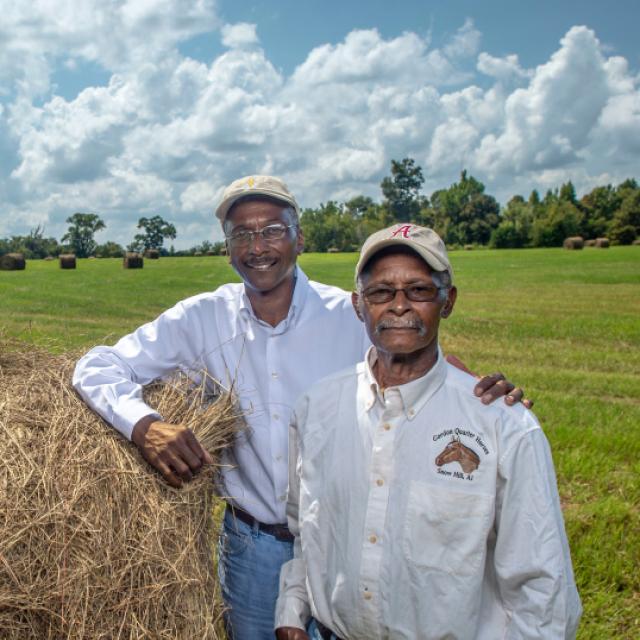
To get started with NRCS, we recommend you stop by your local NRCS field office. We’ll discuss your vision for your land.
NRCS provides landowners with free technical assistance, or advice, for their land. Common technical assistance includes: resource assessment, practice design and resource monitoring. Your conservation planner will help you determine if financial assistance is right for you.
We’ll walk you through the application process. To get started on applying for financial assistance, we’ll work with you:
- To fill out an AD 1026, which ensures a conservation plan is in place before lands with highly erodible soils are farmed. It also ensures that identified wetland areas are protected.
- To meet other eligibility certifications.
Once complete, we’ll work with you on the application, or CPA 1200.
Applications for most programs are accepted on a continuous basis, but they’re considered for funding in different ranking periods. Be sure to ask your local NRCS district conservationist about the deadline for the ranking period to ensure you turn in your application in time.
As part of the application process, we’ll check to see if you are eligible. To do this, you’ll need to bring:
- An official tax ID (Social Security number or an employer ID)
- A property deed or lease agreement to show you have control of the property; and
- A farm number.
If you don’t have a farm number, you can get one from USDA’s Farm Service Agency. Typically, the local FSA office is located in the same building as the local NRCS office. You only need a farm number if you’re interested in financial assistance.
NRCS will take a look at the applications and rank them according to local resource concerns, the amount of conservation benefits the work will provide and the needs of applicants. View Application Ranking Dates by State.
If you’re selected, you can choose whether to sign the contract for the work to be done.
Once you sign the contract, you’ll be provided standards and specifications for completing the practice or practices, and then you will have a specified amount of time to implement. Once the work is implemented and inspected, you’ll be paid the rate of compensation for the work if it meets NRCS standards and specifications.