


NRCS State Watershed Program Managers
Contact your local NRCS Watershed Program manager for assistance:

Official websites use .gov
A .gov website belongs to an official government organization in the United States.

Secure .gov websites use HTTPS
A lock (
) or https:// means you’ve safely connected to the .gov website. Share sensitive information only on official, secure websites.
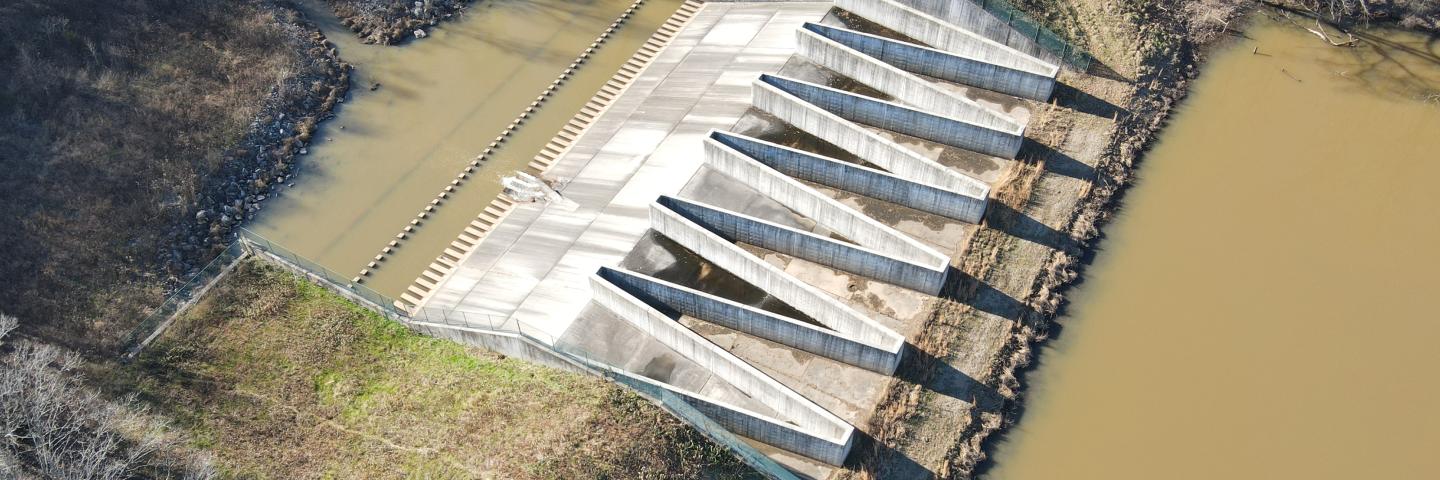
The Watershed Rehabilitation Program (REHAB) helps project sponsors rehabilitate aging dams that are reaching the end of their design life and/or no longer meet federal or state safety criteria or performance standards. Since 1948, NRCS has assisted local sponsors in constructing over 11,850 dams.
NRCS dams in Nebraska perform as intended after intense heavy rainfall this month. In tandem with local conservation partners, the Nebraska Association of Resources District, emergency managers put boots-on-the-ground to access DamWatch alerts on over 19 dams in the Aowa Creek Watershed of Dixon County.
For current Watershed REHAB program investments - click here.
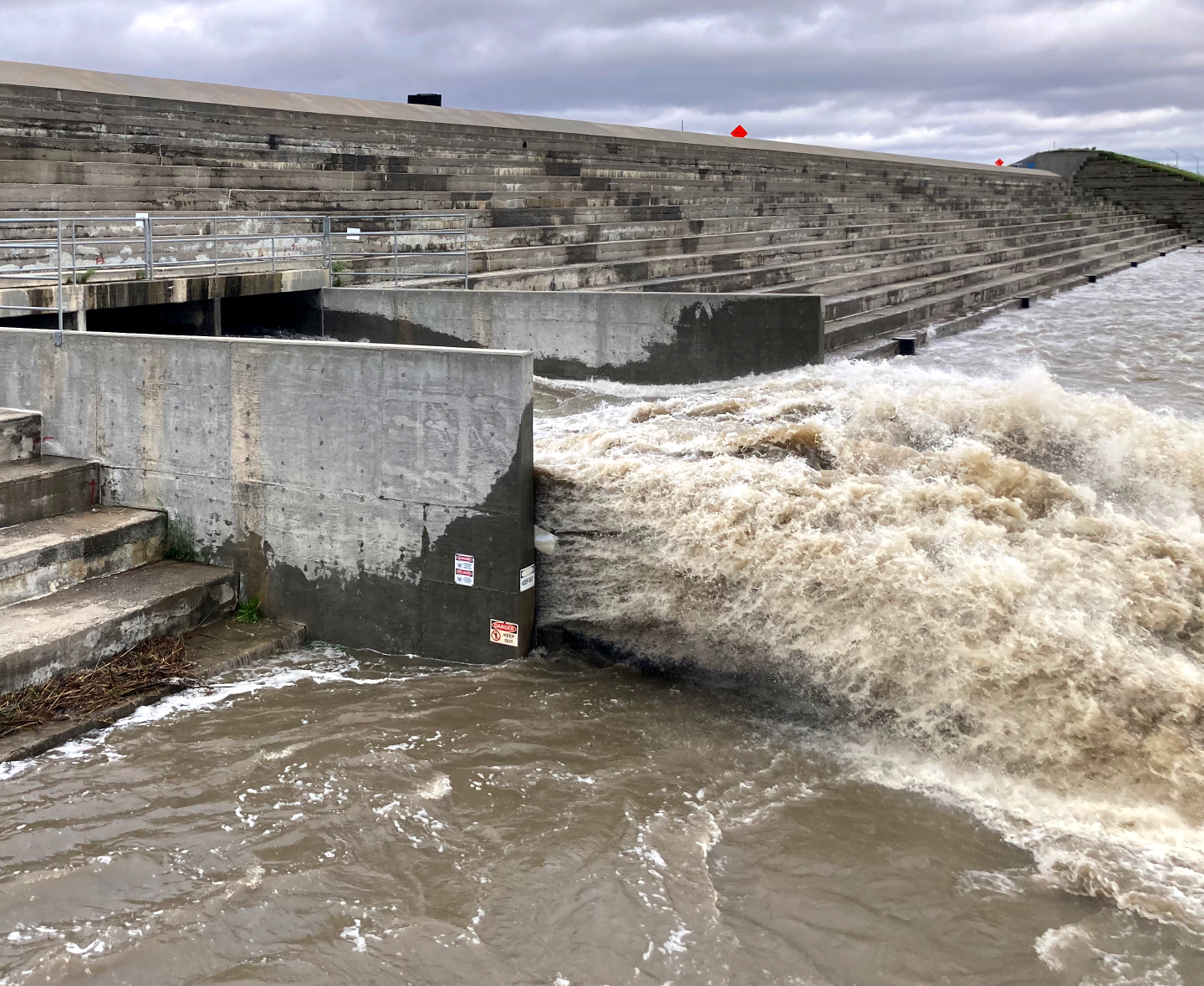
The Watershed REHAB program provides assistance to local project sponsors to:
These rehabilitation efforts, authorized by Public Law 83-566 and 78-534, address critical public health and safety concerns should a dam failure occur.
Since 1948, the Natural Resources Conservation Service has assisted local sponsors in constructing over 11,845 dams.
BENEFITS
Across the Nation, watershed REHAB projects provide over $2.2 billion in reduced flooding and erosion damage while improving wildlife habitat, recreation, water quality and supply for an estimated 47 million people. These projects also provide economic growth and opportunity for rural communities.
Dams are silent protectors, located in remote locals, that protect lives and property downstream. All have a lifespan that requires consistent oversight to ensure they continue to meet state and federal design, safety, and performance criteria. NRCS Watershed REHAB Program provides local sponsors with technical and financial assistance to address concerns before they become a liability.
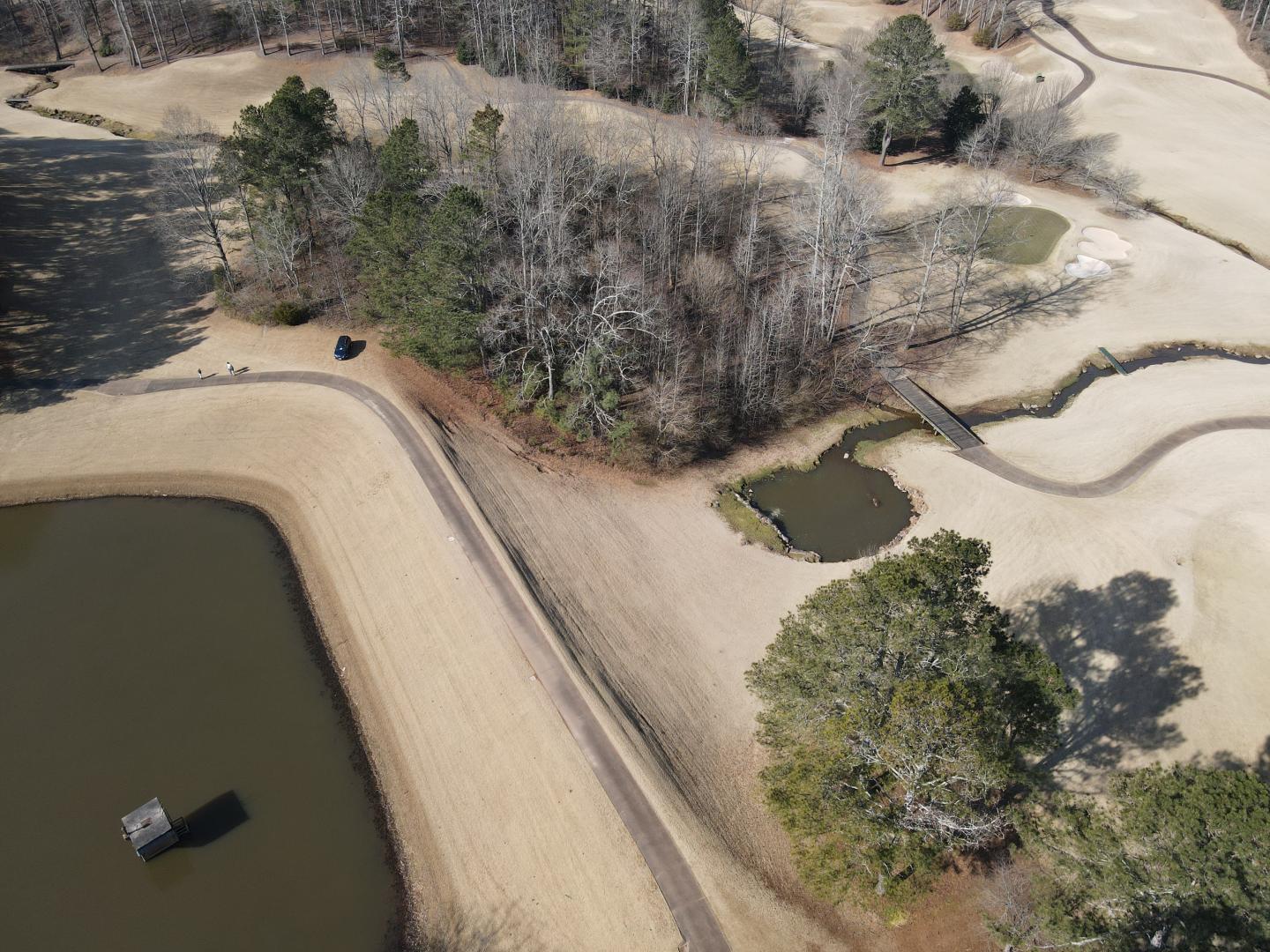
DamWatch assists in monitoring dams across 47 states, including Puerto Rico, and provides web-based monitoring of dams during rainfall, snowmelt, or seismic events.
Watershed project sponsors represent interests of the local community in federally assisted watershed projects. Sponsors submit a request for financial assistance to NRCS. When funding is allocated, the sponsor and NRCS enter into an agreement that defines the roles and responsibilities of each party to complete the rehabilitation project.
A watershed plan is developed for each project to address environmental impacts, costs, benefits, planned conservation practices, and the responsibilities of involved parties. A variety of agencies and organizations can assist sponsors with developing a plan.
NRCS provides technical and financial assistance to sponsors and assists them with the planning, design, and construction of the projects.
For more information on Watershed REHAB Program, please contact your local NRCS office.
Contact your local NRCS Watershed Program manager for assistance:
Step-by-step guide for Sponsors who have entered into an agreement with NRCS
The National Watershed Program Manual provides policy, guidance and suggestions for working through the various stages of watershed projects, from working with potential sponsors to providing project rehabilitation…
Dam owners shoulder the responsibility for the safety and proper operation of their dams, including regular inspections, maintenance, and emergency preparedness.

NRCS is currently rehabilitating two dams located in Athens County and five dams located in Fairfield County.
Athens County
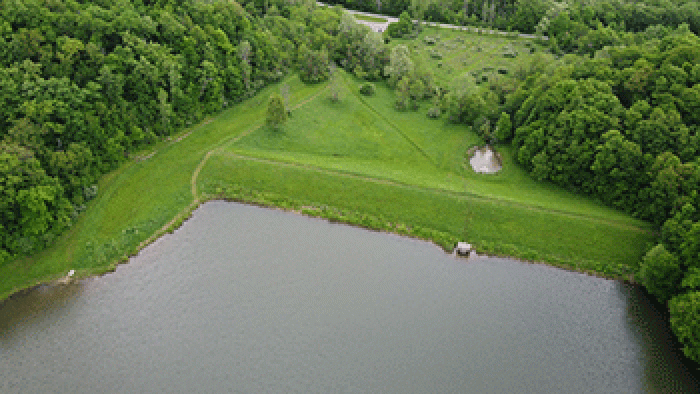
Fox Lake Dam and Meeks Lake Dam are located in Athens County and provide numerous benefits to the community. However, these structures are at the end of their 50-year design life. The Natural Resource Conservation Service and the Margaret Creek Conservancy District are currently working on a $1 million project to assess and rehabilitate these structures.
The current phase of this project is scheduled for completion in the spring of 2022. Both Meeks Lake Dam (constructed in 1973) and Fox Lake (constructed in 1967) were built as “significant hazard potential” structures but are now classified as a “high hazard potential” structures and no longer meet current state or Federal design criteria and performance standards. The dams are being assessed to determine the most effective options for maintaining flood protection while providing other benefits to the local community such as recreation and wildlife habitat preservation.
This project is currently undergoing a final an internal review by the contractor and NRCS. The project partners expect to announce a general release of this information in March 2022 followed by a public presentation to elicit public feedback. The final report is expected to become available in the summer of 2022.
Fairfield County
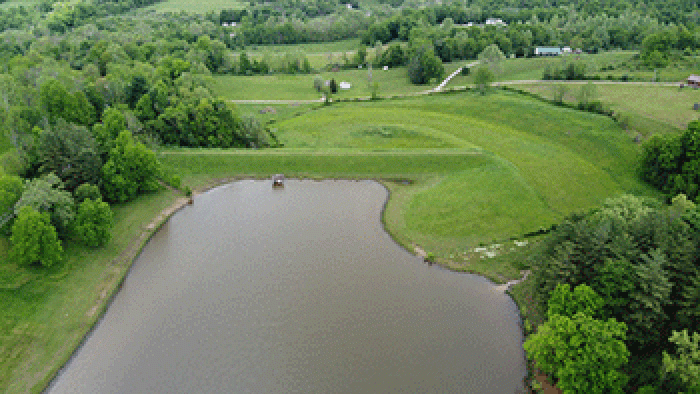
Rock Mill Dam or Dam No. 9, located off of Mt. Zion Rd., and the Hunter’s Run Conservancy District-owned Dam No. 4, located off of Stonewall Cemetery Rd., have been selected for commencement of engineering studies in preparation for rehabilitation. NRCS has dedicated engineering resources to identify the needed upgrades and repairs to meet current design standards and provide for the next fifty years of operation.
The current phase of this project began in September 2021 and is scheduled to continue through the spring of 2023. Rock Mill Dam was completed in 1960 as a “high hazard potential” dam while Structure 4 was built as a “significant Hazard potential” dam. Both structures are now classified as a “high hazard potential” and no longer meet current state or Federal design criteria and performance standards. The dams are being assessed to determine the most effective options for maintaining flood protection while providing other benefits to the local community.
A public hearing regarding the plan to rehabilitate Hunter’s Run Structures 4 and 9 was held at the end of 2021 with the intent of informing the public of the ongoing work on these structures and elicit feedback from interested parties and organizations. A recording of this meeting is available and can be accessed through the following link: https://youtu.be/sIjtBbvlp3M
In addition, Hunter’s Run structures 1, 2, and 3 are scheduled to begin their rehabilitation assessment beginning in the summer of 2022.
Contact your local service center to start your application.
Do you farm or ranch and want to make improvements to the land that you own or lease?
Natural Resources Conservation Service offers technical and financial assistance to help farmers, ranchers and forest landowners.

To get started with NRCS, we recommend you stop by your local NRCS field office. We’ll discuss your vision for your land.
NRCS provides landowners with free technical assistance, or advice, for their land. Common technical assistance includes: resource assessment, practice design and resource monitoring. Your conservation planner will help you determine if financial assistance is right for you.
We’ll walk you through the application process. To get started on applying for financial assistance, we’ll work with you:
Once complete, we’ll work with you on the application, or CPA 1200.
Applications for most programs are accepted on a continuous basis, but they’re considered for funding in different ranking periods. Be sure to ask your local NRCS district conservationist about the deadline for the ranking period to ensure you turn in your application in time.
As part of the application process, we’ll check to see if you are eligible. To do this, you’ll need to bring:
If you don’t have a farm number, you can get one from USDA’s Farm Service Agency. Typically, the local FSA office is located in the same building as the local NRCS office. You only need a farm number if you’re interested in financial assistance.
NRCS will take a look at the applications and rank them according to local resource concerns, the amount of conservation benefits the work will provide and the needs of applicants. View Application Ranking Dates by State.
If you’re selected, you can choose whether to sign the contract for the work to be done.
Once you sign the contract, you’ll be provided standards and specifications for completing the practice or practices, and then you will have a specified amount of time to implement. Once the work is implemented and inspected, you’ll be paid the rate of compensation for the work if it meets NRCS standards and specifications.