


Watersheds impact everyone; every community, farm, ranch, and forest. They provide a vital resource for all living things to survive and thrive. All watersheds are interconnected, creating a land-water system that conveys water to its final destination such as a river, lake, wetland, or estuary.
Projects in the Planning Phase
Big Sandy Watershed Project
- Project Description - The purpose of the proposed project is to provide a reliable, efficient, and safe water-delivery system that sustains the agricultural community in Sweetwater County. These project objectives will be accomplished by lining approximately 2.4 miles of the Eden Canal; replacing approximately 11.5 miles of open canal within the Farson and E-33 Laterals with pressurized pipelines; and replacing the sand trap located along the Eden Canal.
- NEPA Analysis - Completed
- Current Status - Planning
- Project Description - The purpose of the proposed project is to provide a reliable, efficient, and safe water-delivery system that sustains the agricultural community in Sweetwater County. These project objectives will be accomplished by lining approximately 2.4 miles of the Eden Canal; replacing approximately 11.5 miles of open canal within the Farson and E-33 Laterals with pressurized pipelines; and replacing the sand trap located along the Eden Canal.
Further information may be obtained for this project by contacting:
Shawn Follum, P.E.
State Conservation Engineer
USDA Natural Resources Conservation Service
100 East B Street
P.O. Box 33124
Casper, Wyoming 82602-5011
Bear River and Yellow Creek Watershed Project
- Project Description - The purpose of the proposed project is to provide cost effective flood protection to the town of Evanston and to provide a reliable, efficient, and safe irrigation water delivery system to sustain the agricultural community in Uinta County. These project objectives will be accomplished by piping and pressurizing 10.2 miles of the Old City Ditch, replacing turnouts; constructing four piped flood water conveyances with 7.0 miles of pipe; constructing a detention basin; installing a screening structure at the Bear River diversion; and connecting existing sidewalks with 1.5 miles of new asphalt trails and 0.4 miles of new sidewalk.
- NEPA Analysis - Completed
- Current Status - Planning
- Project Description - The purpose of the proposed project is to provide cost effective flood protection to the town of Evanston and to provide a reliable, efficient, and safe irrigation water delivery system to sustain the agricultural community in Uinta County. These project objectives will be accomplished by piping and pressurizing 10.2 miles of the Old City Ditch, replacing turnouts; constructing four piped flood water conveyances with 7.0 miles of pipe; constructing a detention basin; installing a screening structure at the Bear River diversion; and connecting existing sidewalks with 1.5 miles of new asphalt trails and 0.4 miles of new sidewalk.
Further information may be obtained for this project by contacting:
Shawn Follum, P.E.
State Conservation Engineer
USDA Natural Resources Conservation Service
100 East B Street
P.O. Box 33124
Casper, Wyoming 82602-5011
Ready to get started?
Contact your local service center to start your application.
How to Get Assistance
Do you farm or ranch and want to make improvements to the land that you own or lease?
Natural Resources Conservation Service offers technical and financial assistance to help farmers, ranchers and forest landowners.
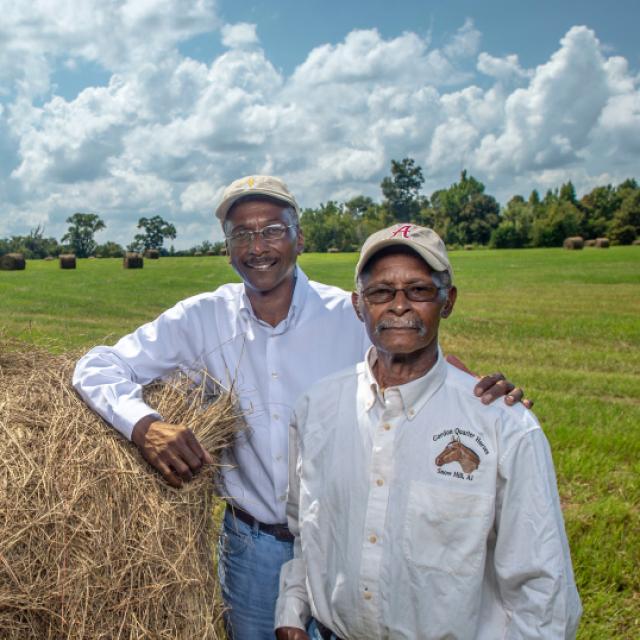
To get started with NRCS, we recommend you stop by your local NRCS field office. We’ll discuss your vision for your land.
NRCS provides landowners with free technical assistance, or advice, for their land. Common technical assistance includes: resource assessment, practice design and resource monitoring. Your conservation planner will help you determine if financial assistance is right for you.
We’ll walk you through the application process. To get started on applying for financial assistance, we’ll work with you:
- To fill out an AD 1026, which ensures a conservation plan is in place before lands with highly erodible soils are farmed. It also ensures that identified wetland areas are protected.
- To meet other eligibility certifications.
Once complete, we’ll work with you on the application, or CPA 1200.
Applications for most programs are accepted on a continuous basis, but they’re considered for funding in different ranking periods. Be sure to ask your local NRCS district conservationist about the deadline for the ranking period to ensure you turn in your application in time.
As part of the application process, we’ll check to see if you are eligible. To do this, you’ll need to bring:
- An official tax ID (Social Security number or an employer ID)
- A property deed or lease agreement to show you have control of the property; and
- A farm number.
If you don’t have a farm number, you can get one from USDA’s Farm Service Agency. Typically, the local FSA office is located in the same building as the local NRCS office. You only need a farm number if you’re interested in financial assistance.
NRCS will take a look at the applications and rank them according to local resource concerns, the amount of conservation benefits the work will provide and the needs of applicants. View Application Ranking Dates by State.
If you’re selected, you can choose whether to sign the contract for the work to be done.
Once you sign the contract, you’ll be provided standards and specifications for completing the practice or practices, and then you will have a specified amount of time to implement. Once the work is implemented and inspected, you’ll be paid the rate of compensation for the work if it meets NRCS standards and specifications.