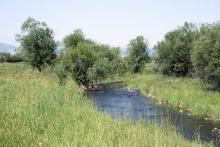
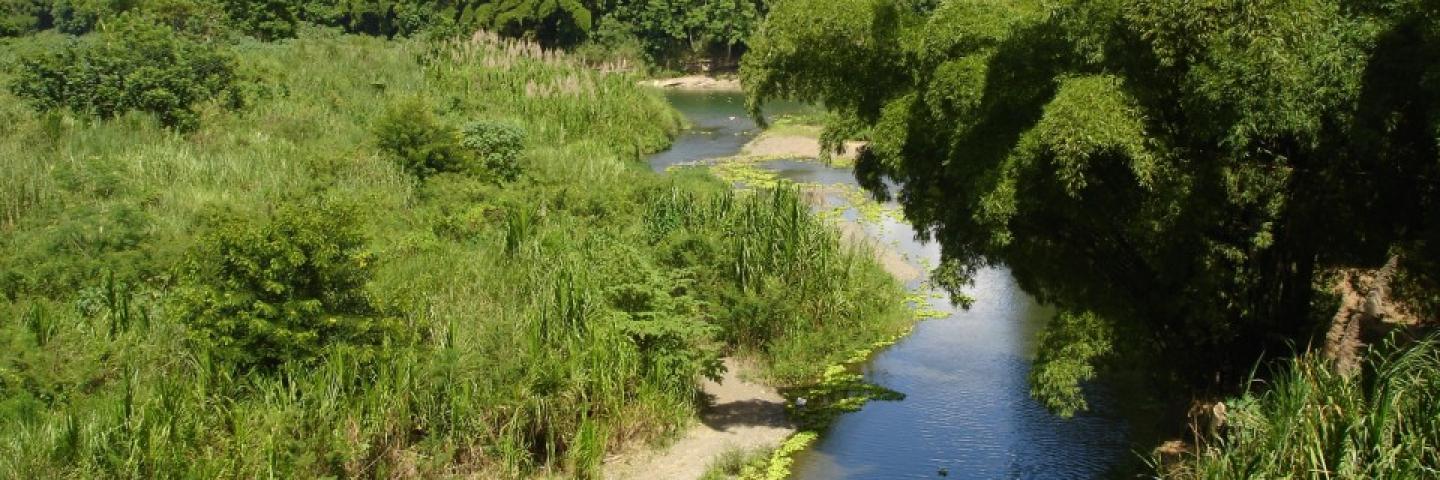
Floodplain of the Rio de La Plata, Puerto Rico.

National Water Quality Initiative - Oregon

As USDA’s premiere water quality initiative, National Water Quality Initiative (NWQI) provides a way to accelerate voluntary, on-farm conservation investments and focused water quality monitoring and assessment resources where they can deliver the greatest benefits for clean water.

NWQI Map
Click to view interactive map of National Water Quality Initiative Watersheds

How it Works

Now in its eleventh year, the National Water Quality Initiative is a partnership among NRCS, state water quality agencies and the U.S. Environmental Protection Agency to identify and address impaired water bodies through voluntary conservation. NRCS provides targeted funding for financial and technical assistance in small watersheds most in need and where farmers can use conservation practices to make a difference.

Conservation systems include practices that promote soil health, reduce erosion and lessen nutrient runoff, such as filter strips, cover crops, reduced tillage and manure management. These practices not only benefit natural resources but enhance agricultural productivity and profitability by improving soil health and optimizing the use of agricultural inputs.

State water quality agencies and other partners contribute additional resources for watershed planning, implementation and outreach. They also provide resources for monitoring efforts that help track water quality improvements over time.

Source Water Protection

In FY19, NRCS expanded the scope of NWQI to include source water protection, including both surface and ground water public water systems, and is now a special component of NWQI. There are 9 implementation projects and 15 readiness projects in FY22. NWQI assists partners in adapting and expanding source water protection plans to identify critical source areas needing further treatment related to agricultural land uses. 

Results

Since 2012, NRCS has worked with more than 5,600 producers to adopt conservation practices on more than 1,190,000 acres in priority watersheds through NWQI. To date, at least 16 impaired water bodies have been improved and subsequently scheduled for de-listing or otherwise removed from NWQI due to successful water quality improvements.

Water quality is improving in NWQI watersheds.  State water quality agency partners report that 36% of NWQI monitoring watersheds show an improvement in water quality in at least one of the NWQI-monitored pollutants (based on 2017-2020 data). Further, 73% of these improvements can be attributed to or associated with agricultural conservation practices implemented by farmers and ranchers.

State water quality agencies are a key partner in the success of NWQI efforts. This includes providing analysis of long-term water quality trends in NWQI watersheds through in-stream monitoring. State water quality agencies are assessing in-stream water quality progress by monitoring in at least one NWQI watershed per state using EPA Clean Water Act Section 319 or other funds. The objective is to assess whether water quality and/or biological condition related to nutrients, sediments, or livestock-related pathogens have changed since the start of the NWQI in the watershed, and if so, whether this can be associated with voluntary conservation implemented on agricultural lands.


Learn More

For more information regarding NRCS programs and initiatives or to apply for assistance, please contact your local NRCS field office.


Oregon's FY26 National Water Quality Initiative (NWQI) Funding 

The following information reflects Fiscal Year 2026 National Water Quality Initiative (NWQI) funding for Oregon farmers, ranchers and forest land owners. Applicants will be ranked against the following information. Reach out to your local USDA Service Center to learn more and apply. 

Land Uses

  • Crop
  • Pasture
  • Range
  • Forest
  • AAL
  • Farmstead
  • Water

Program Questions

  1. On the CPA-1200 did the participant self-certify as BFR or SDFR?
  2. Will the producer be a first-time adopter of any conservation practice(s) included in the contract?

Mollala NWQI

Resource Concerns: Water Quality Degradation - Sediment in surface waters; Nutrients in surface or ground waters

Conservation Practices: 472, 590, 575, 314, 327, 328, 340, 342, 382, 386, 393, 512, 412, 561, 422, 315, 441, 442, 516, 430, 449, 614, 590, 595, 528, 533, 329, 391, 390, 558, 350, 490, 587, 612, 620, 635, 329, 336

Ranking Questions: 
1. Do you have a conservation plan from the NRCS or the SWCD that details your conservation priorities, planned practice amounts and locations? 

2. Will you be implementing practices that will reduce the risk of erosion or improve soil health? 

3. Will you be implementing practices that directly benefit a riparian forest buffer? 

4. Will you be implementing practices that provide direct protection to water bodies (streams, ponds, wetlands, ditches, swales, drainage tile outlets) on your farming operation? 

5. Will you be implementing irrigation practices that have a complete vendor package design that will improve irrigation efficiency by at least 20%? 

6. Will you be implementing practices that will reduce the risk of nutrients, pathogens or chemical pollutants being discharged to surface waters? 

Monroe NWQI

Resource Concerns: Field Pesticide Loss - Pesticides transported to surface waters; Field sediment and nutrient pathogen loss - Nutrients transported to surface water, Pathogens and chemicals from manure, biosolids, or compost applications transported to surface water, Sediment transported to surface water

Conservation Practices: 

  • Agricultural Energy Design - 120
  • Waste Storage Facility - 313
  • Brush Management - 314
  • Herbaceous Weed Treatment - 315
  • Conservation Cover - 327
  • Cover Crop - 340
  • Roofs and Covers - 367
  • Fence - 382
  • Woody Residue Treatment - 384
  • Riparian Forest Buffer - 391
  • Grassed Waterway - 412
  • Wildlife Habitat Planting - 420
  • Irrigation Pipeline - 430
  • Irrigation System, Microirrigation - 441
  • Sprinkler System - 442
  • Irrigation Water Management - 449
  • Tree/Shrub Site Preparation - 490
  • Pasture and Hay Planting - 512
  • Livestock Pipeline - 516
  • Prescribed Grazing - 528
  • Pumping Plant - 533
  • Roof Runoff Structure - 558
  • Heavy Use Area Protection - 561
  • Nutrient Management - 590
  • Tree/Shrub Establishment - 612
  • Watering Facility - 614
  • Underground Outlet - 620
  • Forest Stand Improvement - 666

Ranking Questions: 
1. Will a buffer be established adjacent to surface water that will exclude livestock or prevent run-off from agricultural production? 

2. Will nutrient management be applied so that nutrient applications will not exceed OSU recommendations? 

3. Will practices be adopted that will increase soil organic matter, thereby increasing soil water holding capacity? 

4. Is the property within the Bear Creek Upper Willamette SWCD Strategic Implementation Area? 

5. Will practices be adopted that will reduce direct run-off into surface water from Animal Feeding Operations? 

6. Will irrigation efficiency by improved in the Owens Creek Watershed? 

Medford NWQI

Resource Concerns: Field sediment, nutrient and pathogen loss -  Sediment transported to surface waters, Nutrients transported to surface waters, Nutrient transported to  groundwater

Conservation Practices: 

  • Brush Management - 314
  • Herbaceous Weed Treatment - 315
  • Conservation Cover - 327
  • Residue and Tillage Management, No-till - 329
  • Cover Crop - 340
  • Fence - 382
  • Riparian Forest Buffer - 391
  • Irrigation Pipeline - 430
  • Irrigation System, Microirrigation - 441
  • Sprinkler System - 442
  • Pasture and Hay Planting - 512
  • Prescribed Grazing - 528
  • Pumping Plant - 533
  • Heavy Use Area Protection - 561
  • Watering Facility - 614

Ranking Questions: 
1. Does 50% or more of the PLU intersect a critical source water Rogue NWQI watershed?
a) Kanutchan Creek (171003070812) 
b) Lower Antelope Creek (171003070811)
c) Lick Creek (171003070809) 
d) Reese Creek (171003070703) 
e) Whetstone Creek (171003080202) 
f) Indian Creek (171003070702) 

2. In which Rogue NWQI identified watershed(s) does the project occur?
a) Lower Antelope Creek OR Kanutchan Creek Watersheds 
b) Reese Creek or Lick Creek Watersheds 
c) Whetstone Creek or Indian Creek Watersheds 

3. What is highest stream order (as defined by Jackson County GIS data) of all streams within the PLU that planned Conservation Practices would improve?
a) Perennial 
b) Intermittent 
c) Ephemeral 

4. Does any stream impacted by the project have Essential Salmonid Habitat (ESH) status (as defined by Oregon Dept. of State Lands)? 

5. Will the following Irrigation Improvement practices be contracted with the PLU on flood irrigated land?
a) 442 - Irrigation System Sprinkler OR 441 - Irrigation System Micro or other practice that eliminates irrigation tailwater 
b) 443 - Irrigation System, Surface OR 587 - Structure for Water Control OR other TRAPPING or CONTROLLING practice that results in cleaner tailwater 
c) Otherwise

6) Will the following riparian forest management practices be contracted within the riparian area (50 ft of stream centerline) within the PLU?
a) 382 - Fence AND 391 - Riparian Forest Buffer 
b) 382 - Fence OR 391 - Riparian Forest Buffer 
c) Otherwise

7) Will the following grazing management practices be contracted within the PLU on over 50% of irrigated pastureland?
a) Grazing management with riparian protections
b) Grazing management on irrigated pasture 
c) Grazing management on dryland pasture/range 
d) Otherwise

8) Is the applicated representative of an Historically Underserved (HU) community, including beginning farmers/ranchers, socially disadvantaged community members, veterans, or residents with limited resources? 
 

Baker NWQI

Resource Concerns: Degraded Plant Condition - Plant productivity and health; Pest Pressure - Plant pest pressure; Fire Management - Wildfire hazard from biomass accumulation

Conservation Practices: 314, 342, 383, 384, 394, 550, 647, 666

Ranking Questions: 
1. For the planned project which has disease or insect infestation present within or adjacent to the planned project area, what is the tree density with hazardous fuel loads?
a) Predominantly High Density (over 900 trees per acre) 
b) Predominantly Medium Density (between 600 and 900 trees per acre) 
c) Low or N/A 

2. Is the project leveraged with project dollars from State or Local funding sources such as Baker County, ODF, or SWCD? 

3. How far is the planned project area from forest thinning or hazardous fuel reduction projects that have occurred in the last 5 years?
a) Directly adjacent 
b) Within 1 mile 
c) >1 mile 

4. Will the project incorporate additional practices to further enhance wildlife habitat (must be added in the CPO with job sheets to get credit)? 

5. Has ODF completed the practice specifications for the enrolled acres? 

Siletz NWQI

Resource Concerns: Water Quality Degradation - Nutrients in Surface or Ground Waters; Water Quality - Sediment in Surface Waters 

Conservation Practices: 

  • CNMP-Design and Implementation Activity - 101
  • Comprehensive Nutrient Management Plan - 102
  • Forest Management Plan - 106
  • FMP-Design and Implementation Activity - 165
  • CEMA-Soil and Source Testing for Nutrient Management - 217
  • Brush Management - 314
  • Herbaceous Weed Treatment - 315
  • Composting Facility - 317
  • Roofs and Covers - 367
  • Fence - 382
  • Woody Residue Treatment - 384
  • Riparian Herbaceous Cover - 390
  • Riparian Forest Buffer - 391
  • Tree/Shrub Site Preparation - 490
  • Livestock Pipeline - 516
  • Roof Runoff Structure - 558
  • Heavy Use Area Protection - 561
  • Stream Crossing - 578
  • Nutrient Management - 590
  • Watering Facility - 614
  • Underground Outlet - 620
  • Restoration of Rare or Declining Natural Communities - 643
  • Upland Wildlife Habitat Management - 645
  • Forest Stand Improvement - 666

Ranking Questions: 

1. Application includes practices that will directly reduce sediment, nutrient, or pathogen transport to surface waters.

2. Application includes a protected riparian forest buffer that will provide stream shading to directly improve elevated water temperatures.
a. >100 ft buffer                   
b. 35-100 ft buffer               
c. <35 ft buffer    
                 
3. Application includes planning activities (Forest Management Plan or Comprehensive Nutrient Management Plan) that will include practices addressing sediment, nutrient, or pathogen transport to surface waters or elevated stream temperatures.

4. The conservation plan has been developed or funded by more than one entity/partner, or it is part of a larger project that addresses water quality.

5. Engineering designs for planned practices have already been completed or will be completed by a Technical Service Provider, private engineer, or project partner.

6. The landowner has all necessary permits required to implement planned practices or is actively working with a partner entity to secure necessary permits.

Ready to get started?

Contact your local service center to start your application.

Find Your Local Service Center

USDA Service Centers are locations where you can connect with Farm Service Agency, Natural Resources Conservation Service, or Rural Development employees for your business needs. Enter your state and county below to find your local service center and agency offices. If this locator does not work in your browser, please visit offices.usda.gov.

How to Get Assistance

Do you farm or ranch and want to make improvements to the land that you own or lease?

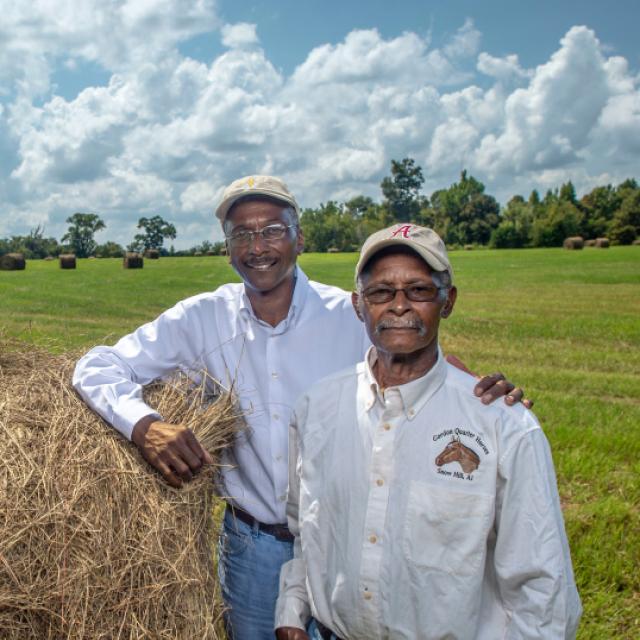
Natural Resources Conservation Service offers technical and financial assistance to help farmers, ranchers and forest landowners.
how to get started

To get started with NRCS, we recommend you stop by your local NRCS field office. We’ll discuss your vision for your land.

NRCS provides landowners with free technical assistance, or advice, for their land. Common technical assistance includes: resource assessment, practice design and resource monitoring. Your conservation planner will help you determine if financial assistance is right for you.

We’ll walk you through the application process. To get started on applying for financial assistance, we’ll work with you:

  • To fill out an AD 1026, which ensures a conservation plan is in place before lands with highly erodible soils are farmed. It also ensures that identified wetland areas are protected.
  • To meet other eligibility certifications.

Once complete, we’ll work with you on the application, or CPA 1200.

Applications for most programs are accepted on a continuous basis, but they’re considered for funding in different ranking periods. Be sure to ask your local NRCS district conservationist about the deadline for the ranking period to ensure you turn in your application in time.

As part of the application process, we’ll check to see if you are eligible. To do this, you’ll need to bring:

  • An official tax ID (Social Security number or an employer ID)
  • A property deed or lease agreement to show you have control of the property; and
  • A farm number.

If you don’t have a farm number, you can get one from USDA’s Farm Service Agency. Typically, the local FSA office is located in the same building as the local NRCS office. You only need a farm number if you’re interested in financial assistance.

NRCS will take a look at the applications and rank them according to local resource concerns, the amount of conservation benefits the work will provide and the needs of applicants. View Application Ranking Dates by State.

If you’re selected, you can choose whether to sign the contract for the work to be done.

Once you sign the contract, you’ll be provided standards and specifications for completing the practice or practices, and then you will have a specified amount of time to implement. Once the work is implemented and inspected, you’ll be paid the rate of compensation for the work if it meets NRCS standards and specifications.