


Success Story

Official websites use .gov
A .gov website belongs to an official government organization in the United States.

Secure .gov websites use HTTPS
A lock (
) or https:// means you’ve safely connected to the .gov website. Share sensitive information only on official, secure websites.
Range and pasture lands are diverse types of land where the primary vegetation produced is herbaceous plants and shrubs.
Range & Pasture lands provide forage for beef cattle, dairy cattle, sheep, goats, horses and other types of domestic livestock. Also many species of wildlife, ranging from big game such as elk to nesting song birds such as meadowlarks, depend on these lands for food and cover.
Primary economic outputs include livestock production, but wildlife values are also a major economic consideration for these lands, especially range lands. Environmental values of these lands are extensive and provide many essential ecosystem services, such as clean water, wildlife and fish habitat, and recreation opportunities. Scenic, cultural, and historic values of these lands provide not only economic benefits, but also quality of life values cherished by many.
Range and pasture lands are located in all 50 states of the US. Privately owned range and pasture lands makes up over 27% (528 million acres) of the total acreage of the contiguous 48 states, and these lands constitute the largest private lands use category, exceeding both forest land (21%) and crop land (18%).
Most grazing lands are considered either range or pasture, but grazing lands also include grazed forest lands, grazed croplands, haylands, and native/naturalized pasture. These other land use types make up an additional 106 million acres of privately owned grazing lands, or about 17% of the total U. S. grazing lands. These other types of grazing lands provide a significant forage resource for U. S. livestock production.
Virtual Fence User Guide for more information.
Ecological Sites comprise a land classification system that describes vegetation, ecological potential, and ecosystem dynamics of land areas. They are used to stratify the landscape and organize ecological information for the purpose of monitoring, assessment, and management. Ecological Sites are the basic unit of land classification for range lands. View recorded Ecological Site Description webinars to learn much more.
Pasture management information (adapted forage species, estimated production, growth curves, and management interpretations) will now be incorporated into ecological site descriptions.
For further information please see National Bulletin 190-19-3, ECS – Developing Pasture State Interpretations:
NRCS Ecological Site Descriptions are stored and accessed within Ecosystem Dynamics Interpretative Tool (EDIT).
Contact local, state, and national NRCS personnel for range, pasture information and expertise.
The National Grazing Lands Coalition (NatGLC) is a nationwide partnership of organizations and individuals that was founded in 1991. The NatGLC works in collaboration with other organizations, agencies and private industry to promote ecologically and economically sound management of private grazing lands for all their adapted uses and multiple benefits to the environment and society.
Review the NatGLC (Formerly GLCI)
Visit the NatGLC website
Visit NatGLC Facebook
Visit NatGLC Instagram
Do you farm or ranch and want to make improvements to the land that you own or lease?
Natural Resources Conservation Service offers technical and financial assistance to help farmers, ranchers and forest landowners.
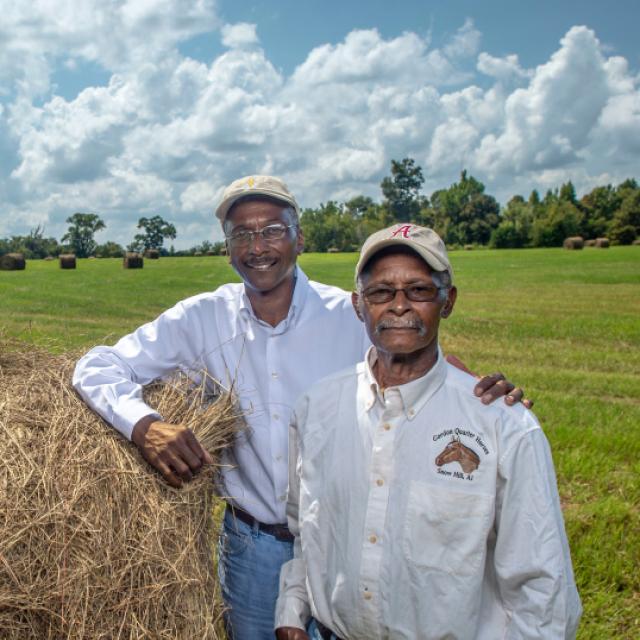
To get started with NRCS, we recommend you stop by your local NRCS field office. We’ll discuss your vision for your land.
NRCS provides landowners with free technical assistance, or advice, for their land. Common technical assistance includes: resource assessment, practice design and resource monitoring. Your conservation planner will help you determine if financial assistance is right for you.
We’ll walk you through the application process. To get started on applying for financial assistance, we’ll work with you:
Once complete, we’ll work with you on the application, or CPA 1200.
Applications for most programs are accepted on a continuous basis, but they’re considered for funding in different ranking periods. Be sure to ask your local NRCS district conservationist about the deadline for the ranking period to ensure you turn in your application in time.
As part of the application process, we’ll check to see if you are eligible. To do this, you’ll need to bring:
If you don’t have a farm number, you can get one from USDA’s Farm Service Agency. Typically, the local FSA office is located in the same building as the local NRCS office. You only need a farm number if you’re interested in financial assistance.
NRCS will take a look at the applications and rank them according to local resource concerns, the amount of conservation benefits the work will provide and the needs of applicants. View Application Ranking Dates by State.
If you’re selected, you can choose whether to sign the contract for the work to be done.
Once you sign the contract, you’ll be provided standards and specifications for completing the practice or practices, and then you will have a specified amount of time to implement. Once the work is implemented and inspected, you’ll be paid the rate of compensation for the work if it meets NRCS standards and specifications.


